
Guide · Saving & Banking · 6 min read
How Much Should I Have in Savings? (By Goal and by Age)
There are really two numbers: cash for emergencies and money for the long run. Here's how much of each to aim for at every age, what typical Americans actually have, and how to catch up if you're behind.
Updated
The short answer
- Start with an emergency fund: a first $1,000, then 3 to 6 months of essential expenses in a high-yield savings account.
- For retirement, a common benchmark (Fidelity) is 1× your salary by 30, 3× by 40, 6× by 50, 8× by 60 and 10× by 67.
- The typical American family had about $8,000 in bank accounts in 2022, and households under 35 with a retirement account had a median of about $18,900 in it.
- Behind? Time beats amount: $300 a month from age 25 can grow to about $913,000 by 67 at 7%, but starting at 35 still gets you about $429,000.
Watch: Lesson 5, The Emergency Fund, Explained: How Much You Need and Where to Keep It
Watch the full lesson (10:29) or read the illustrated write-up below. Open on YouTube
Video chapters
- 0:00 Same repair, $2,600 difference
- 0:39 Intro
- 0:48 What an emergency fund is (and isn't)
- 1:22 Why it matters
- 2:21 How much you need: 3–6 months of essentials
- 3:30 Start small: your first $1,000
- 4:05 Where to keep it (and where not to)
- 5:16 5 ways to build it automatically
- 6:14 Why saving is hard: present bias
- 6:52 Sinking funds for expected expenses
- 7:34 Debt first or emergency fund first?
- 8:10 What counts as an emergency: the 3-question test
- 8:46 Sam & Alex: two starting points, same safety net
- 9:25 3 things to do this week
- 9:51 Recap & next lesson
"How much should I have in savings?" sounds like one question, but it's really two:
- How much cash should I keep for emergencies? That money needs to be safe and available.
- How much should I have saved for the long run, at my age? That money is usually invested, mostly for retirement.
Mixing them up causes real problems. Keep everything in cash and inflation quietly eats your future; invest everything and a car repair forces you to sell in a bad market. This guide gives you a target for each, with honest numbers, then shows what typical Americans actually have and how to catch up if you're behind.
Step 1: your emergency fund
Your first savings goal is an emergency fund: money set aside for one job only, handling the unexpected (a car repair, a medical bill, a job loss).
A common guideline is 3 to 6 months of essential expenses: rent or mortgage, groceries, utilities, insurance, transportation and minimum debt payments. Not your whole lifestyle, just what you'd need to keep going if your income stopped.
| Essential expenses per month | 3 months | 6 months |
|---|---|---|
| $1,500 | $4,500 | $9,000 |
| $2,000 | $6,000 | $12,000 |
| $2,500 | $7,500 | $15,000 |
| $3,500 | $10,500 | $21,000 |
Aim for 6 months or more if you're the only earner, self-employed, or your income changes month to month. Three months can be enough with a stable job and a second income in the household.
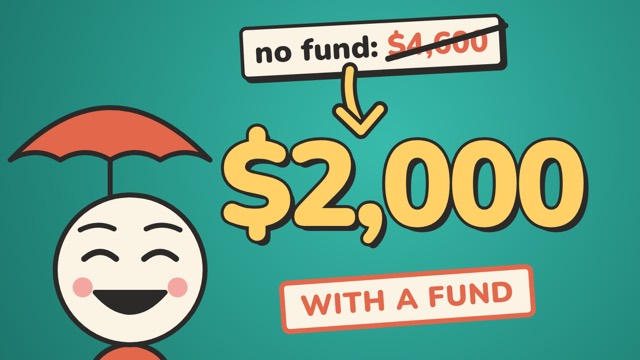
If that feels far away, start with a starter fund of $1,000. That alone handles many surprises and keeps them off a credit card, where a $2,000 repair paid with minimum payments can end up costing about $4,600 (see Lesson 2).
Step 2: how much you should have saved by age
Once the emergency fund is in place, the next question is the long-term one. A widely used benchmark comes from Fidelity, based on your yearly salary:
| Age | Saved for retirement (benchmark) | Example on a $60,000 salary |
|---|---|---|
| 30 | 1× salary | $60,000 |
| 40 | 3× salary | $180,000 |
| 50 | 6× salary | $360,000 |
| 60 | 8× salary | $480,000 |
| 67 | 10× salary | $600,000 |
These targets count everything you've saved for retirement: 401(k)s, IRAs and other investment accounts, but not your emergency fund or the value of your home.
Read them as goalposts, not a test. Fidelity's benchmarks assume you start saving 15% of your income at age 25 (including any employer match), invest more than half in stocks and retire at 67. Fidelity itself calls them aspirational, and most people won't hit all of them. Retiring later lowers the multiple you need.
The 15% figure is the same one we use in the smartest order to use your money: after a starter emergency fund, the employer match and high-interest debt, work up to about 15% of your income for retirement.
What Americans actually have
If those benchmarks feel high, you're not alone. Here's what the Federal Reserve's 2022 Survey of Consumer Finances (the most recent) found:
| Median | |
|---|---|
| Money in checking, savings and money market accounts (all families) | about $8,000 |
| Same, families under 35 | about $5,400 |
| Retirement accounts, households under 35 that have one | about $18,900 |
| Retirement accounts, ages 35–44 | about $45,000 |
| Retirement accounts, ages 45–54 | about $115,000 |
| Retirement accounts, ages 55–64 | about $185,000 |
Two cautions. The retirement figures only count households that have a retirement account, and many don't: only about 57% of households headed by someone aged 55 to 64 did. And a median is just the middle; it isn't a goal. Plenty of people below it are doing fine once you count a pension, and plenty above it still need to save more.
Emergency savings tell a similar story: in Bankrate's 2026 survey, about one in four Americans had six months of expenses saved, and about one in four had no emergency savings at all.
How much should you save each month?
Two simple rules of thumb, from our budgeting lessons:
- The 50/30/20 rule: aim to put about 20% of your take-home pay toward your future (savings, investing and extra debt payments). See Lesson 6.
- The 15% rule for retirement: about 15% of your gross income, including any employer match, once your emergency fund and high-interest debt are handled.
If those are out of reach today, start where you are. Raise your savings rate by 1% a year, or send half of every raise to savings automatically. The direction matters more than the starting number.
Behind? Here's why starting now still matters
The most important variable isn't how much you save. It's how long the money has to grow. Here's what a steady monthly amount could become by age 67 at a 7% average yearly return, compounded monthly:
| Start at | Monthly amount | You put in | Balance at 67 |
|---|---|---|---|
| 25 | $300 | $151,200 | about $913,000 |
| 35 | $300 | $115,200 | about $429,000 |
| 35 | $500 | $192,000 | about $714,000 |
| 45 | $500 | $132,000 | about $312,000 |
| 45 | $1,000 | $264,000 | about $625,000 |
Starting ten years later cuts the result by more than half at the same monthly amount. But look at the other side: someone who starts at 45 with $1,000 a month can still build a meaningful sum. The best time to start was earlier; the second-best time is this month. Try your own numbers in the compound interest calculator, or see the full story in Lesson 1.
Your savings checklist
- Build a $1,000 starter emergency fund in a high-yield savings account.
- Get your full employer 401(k) match, if you have one. It's free money.
- Pay off high-interest debt (above about 8%, like credit cards). Our debt ladder calculator shows which comes first.
- Grow the emergency fund to 3 to 6 months of essentials.
- Work up to 15% of your income for retirement, in low-cost index funds inside a 401(k) or IRA.
- Check your number once a year against the age benchmarks above, and adjust.
Frequently asked questions
How much should I have in savings at 30?
A common benchmark is about 1× your annual salary saved for retirement by 30, plus an emergency fund of 3 to 6 months of essential expenses. On a $60,000 salary, that's about $60,000 in retirement accounts. It assumes you started saving around 15% at 25, so many people will be below it, and that's a reason to start, not to give up.
How much should I have in my savings account?
Enough for an emergency fund: 3 to 6 months of essential expenses, plus any money you'll need within the next few years (a car, a home down payment). Long-term money beyond that usually belongs in investment accounts, where it can grow faster than inflation.
Is $10,000 a good amount of savings?
It depends on your expenses. If your essentials are $2,500 a month, $10,000 covers about four months, a solid emergency fund. It's also above the 2022 median of about $8,000 that American families held in bank accounts.
How much should I have saved by 40?
Fidelity's benchmark is about 3× your salary in retirement savings by 40. The 2022 median retirement balance for households aged 35 to 44 that had an account was about $45,000.
What if I have no savings at all?
Start with one automatic transfer the day after payday, even $25 a week, toward a $1,000 starter fund. $25 a week reaches $1,000 in 40 weeks; $50 a week gets there in 20.
Sources
Emergency fund guideline of 3 to 6 months of essential expenses: a common planning guideline (see Lesson 5). Savings rates: FDIC national average 0.37% (via FRED, September 2026); top high-yield accounts around 4% (Bankrate, 2026). Bankrate 2026 Emergency Savings Report: 27% have six or more months of expenses saved, 24% have none. Retirement benchmarks: Fidelity Viewpoints, "How much do I need to retire?" (1× salary by 30, 3× by 40, 6× by 50, 8× by 60, 10× by 67, assuming 15% saved annually from age 25 including any match, retirement at 67). Federal Reserve, 2022 Survey of Consumer Finances: median transaction account balance about $8,000 (about $5,400 under 35); median retirement account balances among households with accounts of about $18,880 (under 35), $45,000 (35–44), $115,000 (45–54) and $185,000 (55–64); about 57% of households aged 55–64 held retirement accounts. Age-group figures are as reported from the SCF tables. Projections assume end-of-month contributions at a constant 7% average annual return, compounded monthly, to age 67; real returns vary and can be negative.
Money, explained one sketch at a time
Every guide comes from a full video lesson. Subscribe on YouTube so you don't miss the next one.
Subscribe on YouTube See all lessonsThe full lessons
Lesson 5 · Saving & Banking
The Emergency Fund, Explained: How Much You Need and Where to Keep It
The same $2,000 car repair costs about $4,600 on a credit card and exactly $2,000 with an emergency fund. Here's how much you need, where to keep it and how to start when money is tight.

Lesson 1 · Investing
What Happens If You Invest $100 a Month? The Honest Math
You put in $48,000. You could walk away with about $262,000. Here is exactly where the other $214,000 comes from, and why waiting ten years costs more than $140,000.
Lesson 8 · Budgeting & Planning
The Smartest Order to Use Your Money: From Paycheck to Portfolio, Step by Step
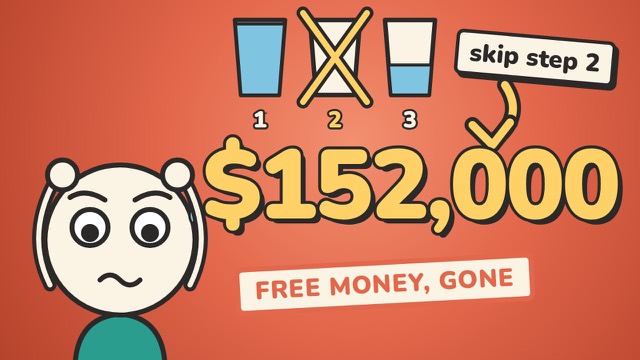
You have $400 left over this month. Pay the card, save it or invest it? The order matters more than you think: skipping one free step at work can cost about $152,000 by retirement.