
Lesson 8 · Budgeting & Planning · 11 min read
The Smartest Order to Use Your Money: From Paycheck to Portfolio, Step by Step
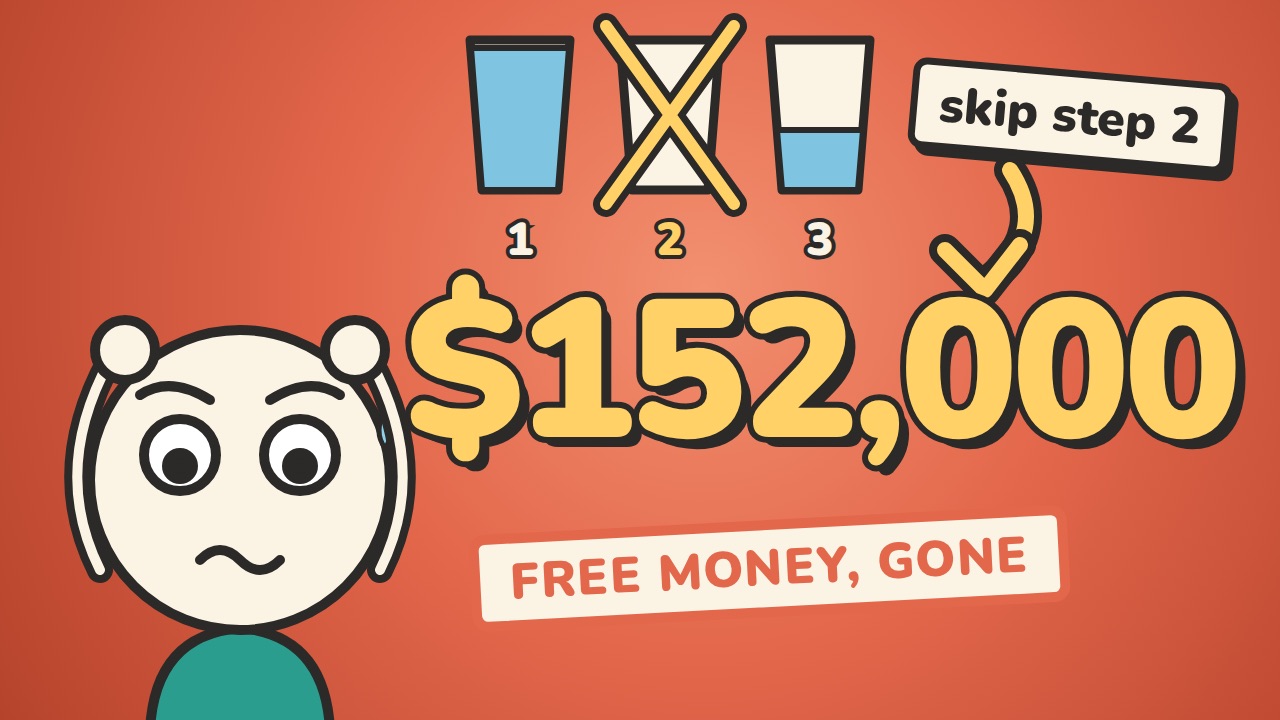
You have $400 left over this month. Pay the card, save it or invest it? The order matters more than you think: skipping one free step at work can cost about $152,000 by retirement.
Updated
The lesson in 30 seconds
- Think of your money as a waterfall: each glass fills, then overflows into the next. Don't fill the last glass first.
- Step 0 basics and minimums, Step 1 a $1,000 starter fund, Step 2 the full employer match, Step 3 high-interest debt, Step 4 3 to 6 months of savings, Step 5 IRA/HSA, Step 6 15% for retirement, Step 7 everything else.
- A typical 50% match on 6% of a $50,000 salary is $1,500 a year of free money. Skipping it could cost about $152,000 over 30 years.
- $3,000 on a 22% card costs about $660 a year; invested at 7% it might earn about $210. Kill high-interest debt before investing beyond the match.
- Don't cash out a 401(k) when you change jobs. Roll it over instead.
You have $400 left over this month. What do you do with it? Pay down the credit card? Put it in savings? Invest it? Most people decide by feeling: whatever seems most urgent, or most exciting, that week.
But the order matters more than you think. Investing while you carry a 22% credit card can quietly cost you hundreds of dollars a year. And skipping one free step at work can cost you over $150,000 by retirement. Same money, different order, completely different result.
In this lesson we draw out the smartest order to use your money, step by step, from your paycheck all the way to your portfolio, using everything from the Money, Drawn Out course so far.
The money waterfall
Here's the picture to keep in your head: a waterfall. Your paycheck pours in at the top. Below it there's a row of glasses. The money fills the first glass; when that glass is full, it overflows into the second; when the second is full, it spills into the third, and so on.
You don't fill the last glass before the first one, and you don't stop pouring when one glass is full. The water just moves on.
Each glass is one step. Some steps protect you, one step is free money, and some steps make your money grow for decades.
| Step | Glass | Why it's here |
|---|---|---|
| 0 | Basics and minimum payments | Keep the lights on and nothing late |
| 1 | $1,000 starter emergency fund | Stop surprises from becoming new debt |
| 2 | Full employer 401(k) match | An instant, risk-free return, often 50% to 100% |
| 3 | High-interest debt (above roughly 8%) | A guaranteed return equal to the interest rate |
| 4 | 3 to 6 months of essential expenses | Real protection against job loss |
| 5 | IRA (and HSA if eligible) | Tax-advantaged long-term growth |
| 6 | 15% of income for retirement | The engine that does the heavy lifting |
| 7 | Everything else | Your goals, your values |
One important note: this is a general order that works for most people, especially beginners. Your situation might be different, and that's fine. Think of it as a map, not a law.
Step 0: cover the basics and pay every minimum
Step zero happens before any of the glasses. Cover the basics, and pay the minimum on every debt.
Rent, food, utilities and transportation, the needs bucket from Lesson 6. If those aren't covered, nothing else matters yet.
And every debt gets at least its minimum payment, on time, every month. Not because the minimum is a good plan (we saw in Lesson 2 that it's a trap), but because a missed payment brings late fees, penalty interest and a hit to your credit score, as we drew out in Lesson 4.
So step zero is simple: the lights stay on and nothing goes late. Put the minimums on autopay and this step runs by itself.
Step 1: a $1,000 starter emergency fund
Step one is a starter emergency fund: about $1,000, or one month of essential expenses.
Why so early, instead of going straight to the debt? Because life doesn't wait for your plan. If your car breaks down while you have zero savings, the money comes from the credit card, and you're right back in the hole you're trying to climb out of. Sam's $2,000 repair, paid with minimums on a card, could cost about $4,600.
It doesn't have to be big yet. It just has to exist: $1,000 in a separate savings account, untouched except for a real emergency. That's the first glass. Lesson 5 shows how to build it automatically.
Step 2: get the full employer match (free money)
Step two is the one most people skip, and it's the only step that gives you free money: the employer match.
Many US employers offer a retirement plan at work, usually a 401(k), and many will match part of what you put in. Here's a common example: your employer matches 50% of your contributions, up to 6% of your salary.
| Salary $50,000, 50% match up to 6% | Per year |
|---|---|
| You contribute 6% | $3,000 |
| Your employer adds | $1,500 |
| Instant return on your money | 50% |
That's an instant 50% return before any investing even happens. Nothing else on this list comes close.
So the rule is: contribute at least enough to get the full match. Not one dollar less. Check your plan documents or ask HR, because every formula is different: some match more, some less, some not at all. Also check the vesting schedule, which says how long you need to stay before the employer's money is fully yours.
What skipping the match costs: $152,000
Let's see what skipping it costs. Alex has a job with exactly that match but has been investing through an app instead, and never signed up for the plan at work. Alex is leaving $1,500 a year on the table, about $125 a month.
Remember Lesson 7? $125 a month, invested for 30 years at a 7% average return, grows to about $152,000.
That's what Alex walks away from. Not because Alex made a bad investment, but because Alex filled the glasses in the wrong order.
Step 3: attack high-interest debt
Step three: pay off high-interest debt. By high-interest we mean anything above roughly 8%. Credit cards are the big one, averaging around 22%. Some personal loans and store cards are just as bad.
Here's why this comes before investing:
| $3,000 for one year | Rate | Result |
|---|---|---|
| Invested (average, not guaranteed) | about 7% | about +$210 |
| Left on a credit card (guaranteed) | about 22% | about −$660 |
You'd be losing the race before it even starts. Paying off a 22% card is like earning a guaranteed 22% return. No investment can promise that.
Avalanche vs snowball
How do you attack it? Two methods from Lesson 2:
- Avalanche: list your debts by interest rate and put every extra dollar toward the highest rate first, paying minimums on the rest. Mathematically, this saves the most money.
- Snowball: pay off the smallest balance first for the quick win, then roll that payment into the next one. It costs a bit more, but some people stick with it better.
Both work. The best one is the one you'll actually finish.
What about low-interest debt, like a car loan at 5% or a student loan at 4%? That doesn't need to be an emergency. Keep paying it on schedule; it comes back in step 7.
Step 4: finish the emergency fund
Step four: grow the emergency fund to 3 to 6 months of essential expenses. Now that the expensive debt is gone, the first glass gets much bigger. Remember: essentials only, not your whole lifestyle.
For Sam, essentials are about $2,450 a month:
| Target | Amount |
|---|---|
| 3 months | about $7,350 |
| 6 months | about $14,700 |
That sounds like a lot, but you're not doing it in a month. You're building it one automatic transfer at a time, and the payment that used to go to the credit card can now go here. Keep it in a high-yield savings account so it at least keeps up a little with inflation.
Once this glass is full, a job loss or a big surprise becomes a hard month, not a disaster. And now the water can flow into growth.
Step 5: IRA and HSA
Step five: invest for the long term with tax advantages. In the US, a popular option is an IRA, an individual retirement account you open yourself. There are two main types:
- Traditional IRA: you may get a tax deduction now; withdrawals in retirement are taxed.
- Roth IRA: you pay tax now; qualified withdrawals in retirement can be tax-free. There are income limits, so check whether you qualify.
For 2026, you can contribute up to $7,500 a year to an IRA (plus a catch-up if you're 50 or older). Lesson 13 draws out traditional vs Roth in detail.
If you have a high-deductible health plan, a health savings account (HSA) can be another powerful option: contributions can be tax-deductible, growth is tax-free and withdrawals for qualified medical expenses are tax-free. The 2026 limit is $4,400 for self-only coverage.
Inside these accounts, many beginners keep it simple with low-cost, broad index funds, which we draw out in Lesson 9.
Step 6: work up to 15% for retirement
Step six: aim to save around 15% of your income for retirement, including any employer match. That's a common rule of thumb, not a magic number. Starting later might mean you need more; starting early might mean a little less is enough.
On a $50,000 salary, 15% is about $625 a month. If that sounds impossible right now, don't jump there in one move. Raise your contribution by 1% every year, or every time you get a raise. Remember Alex's raise rule from Lesson 6: half of every raise goes to the future, automatically. You barely feel it, and in a few years you're there.
That 15% is the engine that, thanks to compound interest, does the heavy lifting over the decades.
Step 7: everything else
Once the first six glasses are flowing, the rest of the water is yours to direct:
- bigger goals, like a house down payment (renting vs buying) or a car paid in cash (lease, finance or cash)
- paying off low-interest debt early, if it gives you peace of mind
- investing in a regular brokerage account, with no special tax benefits but no contribution limits either
There's no single right answer here. This is where your life and your values decide. The point of the order isn't to make you rich overnight; it's to make sure every dollar you have is working in the smartest possible place.
3 common mistakes with the order
1. Investing while carrying a big credit card balance. It feels productive because you're "building wealth", but the card's 22% is eating your 7% alive.
2. Hoarding cash while paying 22% on a card. Once your starter fund is in place, extra cash in savings usually does more good killing the debt.
3. Cashing out your retirement plan when you change jobs. It's tempting because the money suddenly looks available. But withdrawals before age 59½ are generally taxable and may face a 10% additional tax, and you lose all the compounding that money was about to do. Instead, you can usually leave it in the old plan or roll it over into your new plan or an IRA.
The order protects you from all three.
Putting it together with Sam
Sam frees up about $400 a month. Here's how the waterfall works for Sam:
- Bills are on autopay, so step 0 is done.
- Sam already built the $1,000 starter fund in Lesson 5: step 1 done.
- Sam's job offers a match, so Sam signs up and contributes enough to get all of it: step 2.
- Everything else goes at the credit card, avalanche style: step 3.
- Once the card is gone, that payment rolls straight into the emergency fund until Sam has three months saved: step 4.
- Then Sam opens an IRA and invests every month (step 5), and raises the percentage with every raise (step 6).
It won't happen in one year. But every month, Sam knows exactly where the next dollar goes. No guessing, no guilt. Just the next glass.
Three things to do this week
- Find your step. Look at the waterfall and be honest about which glass you're filling right now. That's your only focus.
- Check your employer match. Find out whether your job offers one and what the formula is. If you're not getting all of it, fix that first.
- List your debts with their interest rates. Anything above roughly 8% goes to the top of the list.
Frequently asked questions
In what order should I save, invest and pay off debt?
A common order is: cover essentials and minimum payments, build a starter emergency fund of about $1,000, contribute enough to get any employer 401(k) match, pay off high-interest debt, build three to six months of essential expenses, invest in an IRA or HSA, work up to about 15% of income for retirement, then pursue other goals. Your situation may call for adjustments.
Should I pay off debt or invest?
Pay off high-interest debt, such as credit cards around 22%, before investing beyond your employer match, because the interest you avoid is a guaranteed return. Low-interest debt, such as a 4% to 5% loan, can usually be paid on schedule while you invest.
Why should I get the employer 401(k) match first?
Because it's an instant, risk-free return. A typical match of 50% on contributions up to 6% of salary turns $3,000 of your money into $4,500. On a $50,000 salary, the $1,500 a year match invested for 30 years at 7% could grow to about $152,000.
How much should I save for retirement?
A common rule of thumb is about 15% of income, including any employer match. If you start later you may need more. If 15% isn't possible yet, raise your contribution by 1% a year or with each raise.
Should I build an emergency fund before paying off debt?
Many people build a small starter fund first, around $1,000, so surprise expenses don't go back on a credit card, then focus on high-interest debt, then build the full three to six months.
What is the 2026 IRA contribution limit?
For 2026, the IRA contribution limit is $7,500, with an additional catch-up contribution for people age 50 and older. The 401(k) employee deferral limit is $24,500. Roth IRA eligibility depends on your income.
Assumptions and sources
2026 limits: IRA $7,500 and 401(k) employee deferral $24,500 (IRS, announced November 13, 2025); HSA $4,400 self-only (IRS Rev. Proc. 2025-19). Employer match example: 50% of contributions up to 6% of a $50,000 salary (illustrative; formulas vary and some employers offer no match). $125 a month for 30 years at a 7% average annual return, compounded monthly, is about $152,000 (calculated; real returns vary). Average credit card APR about 22% (Federal Reserve G.19). 12% to 15% total retirement savings guidance: Vanguard, "How America Saves". Withdrawals from retirement accounts before age 59½ are generally taxable and may face a 10% additional tax (IRS; exceptions apply). The "high-interest" threshold of roughly 8% is a rule of thumb. This order is a general guide, not personal financial or tax advice. Sam and Alex are illustrative examples.
One new lesson every week
Each lesson builds on the one before. Subscribe on YouTube so you don't miss the next one.
Subscribe on YouTube See all lessonsKeep learning
Lesson 6 · Budgeting & Planning
The 50/30/20 Rule, Explained: A Simple Budget for Beginners
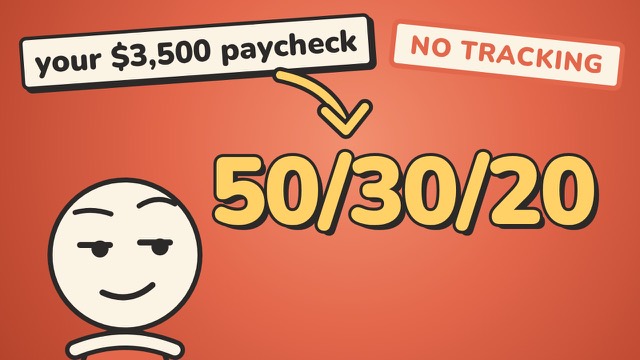
Sam takes home $3,500 and it's gone in two weeks. Here's a budget that takes about 20 minutes to set up, runs almost by itself and never asks you to write down a single coffee.
Lesson 5 · Saving & Banking
The Emergency Fund, Explained: How Much You Need and Where to Keep It
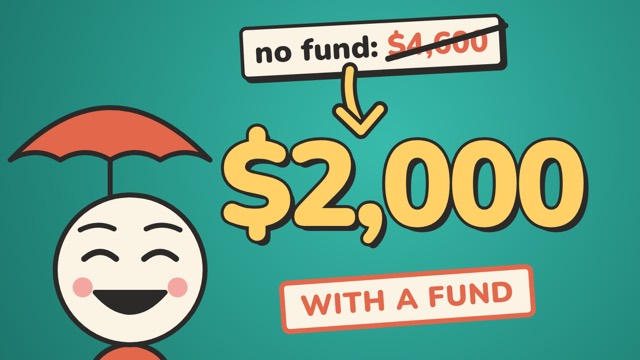
The same $2,000 car repair costs about $4,600 on a credit card and exactly $2,000 with an emergency fund. Here's how much you need, where to keep it and how to start when money is tight.
Lesson 7 · Investing
Compound Interest Explained: Why $25 a Week Becomes $284,000
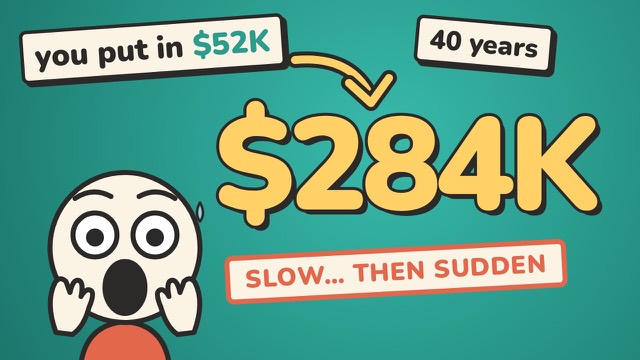
$25 a week, invested for 40 years, could grow to about $284,000 even though you only put in $52,000. Here's the curve behind it, and why the first ten years feel like nothing is happening.