
Guide · Big Money Decisions · 8 min read
How to Start Saving for a House in Your 20s (A Step-by-Step Plan)
The typical first-time buyer is now 40. Starting in your 20s is a real head start. Here's how much cash you actually need, a monthly plan to get there, where to keep it, and the moves that make your future mortgage cheaper.
Updated
The short answer
- You don't need 20% down: 3% to 10% is common, and the median first-time buyer put down 10%. Add about 2% to 5% for closing costs.
- On a $300,000 home, 10% down plus closing costs is about $39,000. Saved over 5 years, that's about $590 a month in a 4% high-yield savings account.
- Keep house money in insured savings, not stocks, if you plan to buy within about five years.
- Your credit score and debts decide your mortgage rate and how much you can borrow, so work on them while you save.
Watch: Lesson 6, The 50/30/20 Rule, Explained: A Simple Budget for Beginners
Watch the full lesson (10:43) or read the illustrated write-up below. Open on YouTube
Video chapters
- 0:00 Same paycheck, gone in 2 weeks
- 0:40 Intro
- 0:48 Why most budgets fail
- 1:31 What a budget really is
- 2:03 Step 1: your real take-home number
- 2:40 The 50/30/20 rule
- 3:31 When your needs are 70%
- 4:22 Needs vs wants: the quick test
- 4:54 The waiting rule
- 5:27 Finding the leaks (it's not the latte)
- 6:26 Pay yourself first, automatically
- 7:14 Your weekly spending number
- 7:49 Zero-based, envelopes, reverse budget
- 8:25 When the budget breaks
- 8:56 Sam & Alex: lifestyle creep
- 9:42 3 things to do this week
- 10:07 Recap & next lesson
Buying a first home is getting later and harder. According to the National Association of Realtors (NAR), the typical first-time buyer in 2025 was 40 years old, a record high, and first-time buyers made up just 21% of purchases, the lowest share since NAR started tracking in 1981.
That's exactly why starting in your 20s matters. Every year you save gives your down payment more time to grow and your credit history more time to mature. This guide lays out a realistic plan: how much cash you actually need, how much to put aside each month, where to keep it, and what to do in the meantime so the mortgage costs less when you get there.
Step 1: decide whether buying is even right for you
Before saving for a house, be honest about one question: how long will you stay? Buying and selling a home costs around 9% of its price in our example (closing costs on the way in, selling costs on the way out), so buying usually only pays off if you stay put for many years. Homeowners who sell today have stayed a median of about 11 years.
Renting isn't throwing money away. In Lesson 12 we follow a buyer and a renter for 30 years at today's rates, and they end up surprisingly close. The renter only wins, though, if they invest the money they save. If you're not sure where you'll live in five to ten years, saving now still makes sense: the money keeps your options open either way.
Step 2: know how much cash you really need
You need two piles of cash, not one:
- The down payment. Many people think it has to be 20%. It doesn't. Some conventional loans allow 3% down for eligible first-time buyers, and FHA loans allow 3.5% down with a credit score of 580 or higher. The median first-time buyer in NAR's 2025 survey put down 10%.
- Closing costs. Lender fees, title insurance, appraisal and prepaid taxes usually add about 2% to 5% of the price. We use 3%.
Here's what that looks like on a $300,000 starter home, with a 30-year mortgage at 7.4% (the Freddie Mac average in October 2026):
| Down payment | Cash at closing (down + 3% closing costs) | Monthly principal & interest | Mortgage insurance (est.) |
|---|---|---|---|
| 3% ($9,000) | about $18,000 | about $2,015 | about $146 a month |
| 5% ($15,000) | about $24,000 | about $1,973 | about $142 a month |
| 10% ($30,000) | about $39,000 | about $1,869 | about $135 a month |
| 20% ($60,000) | about $69,000 | about $1,662 | none |
Put down less than 20% and you'll usually pay private mortgage insurance (PMI), which protects the lender, not you. On a conventional loan it can be cancelled once you reach 20% equity. Taxes, homeowners insurance and maintenance come on top of the payment; Lesson 12 adds them all up.
Step 3: turn the number into a monthly plan
Pick a target and a timeline, then work backward. Here's how much to save each month to reach each goal, in a high-yield savings account earning about 4%:
| Cash goal | In 3 years | In 5 years | In 7 years |
|---|---|---|---|
| $18,000 (3% down + closing) | about $471/month | about $271/month | about $186/month |
| $24,000 (5% down + closing) | about $629/month | about $362/month | about $248/month |
| $39,000 (10% down + closing) | about $1,021/month | about $588/month | about $403/month |
| $69,000 (20% down + closing) | about $1,807/month | about $1,041/month | about $713/month |
This is where starting in your 20s pays off: stretching the timeline from 3 years to 7 years cuts the monthly amount by more than half.
To find the money, use a simple budget such as the 50/30/20 rule from Lesson 6, where 20% of take-home pay goes to your future. On $3,500 a month take-home, that's $700. A house fund can take a big share of it, alongside retirement savings.
Step 4: put it on autopilot
The plan only works if it runs without willpower:
- Open a separate high-yield savings account and name it "House". A named account is harder to raid.
- Set up an automatic transfer for the day after payday. Pay yourself first.
- Send windfalls straight in: tax refunds, bonuses, gifts.
- Raise the transfer with every raise. Half of each raise to the house fund is a painless way to speed up.
Step 5: keep house money safe, not invested
If you plan to buy within about five years, keep the down payment in insured cash: a high-yield savings account, CDs or Treasury bills. Stocks can drop by a third right when you need the money (the S&P 500 fell about 37% in 2008), and a house purchase usually can't wait for the market to recover.
| Timeline to buy | Where the down payment usually belongs |
|---|---|
| Within 5 years | High-yield savings, CDs or Treasury bills |
| More than 5 years, flexible date | Mostly savings, possibly a small share invested |
| Retirement money | Invested for the long run, separate from the house fund |
We draw out whether a high-yield savings account is worth it here. At about 4%, $500 a month for five years grows to about $33,100, versus $30,000 deposited.
Step 6: build the credit score lenders want
Your credit score helps set your mortgage rate, and on a home loan that's worth a lot of money. In Lesson 4, the same $300,000 mortgage at 6.5% instead of 8% saves about $305 a month, close to $110,000 over 30 years.
While you save:
- Pay every bill on time, with autopay for at least the minimum.
- Keep credit card balances low, ideally under 10% of your limits.
- Don't open lots of new accounts in the year before you apply.
- Check your free credit reports at AnnualCreditReport.com and dispute errors.
Step 7: shrink your other debts
Lenders look at your debt-to-income ratio: your monthly debt payments compared with your gross income. Lower debts mean you can qualify for more and get approved more easily.
- Pay off credit cards first. At around 22% APR, they're the most expensive debt you have and they hurt your ratio.
- A car loan payment can cost you house. Every $400 car payment is $400 a month a lender won't let you spend on a mortgage. Our lease, finance or cash lesson shows how to keep car costs down.
- Not sure which debt to tackle first? Use the debt ladder calculator.
Don't skip retirement to buy a house
It's tempting to pour everything into the house fund. But two things come first:
- Your employer's 401(k) match. It's free money, a 100% return. Skipping a typical match for 30 years can cost about $152,000 (Lesson 8).
- A starter emergency fund, so surprises don't go on a card.
If you save in a Roth IRA, your contributions can be withdrawn at any time without tax or penalty, and first-time buyers can also withdraw up to $10,000 of earnings penalty-free under certain conditions. That makes a Roth IRA a flexible backup, but it works best as retirement money first.
Look for first-time buyer help
Most states have a housing finance agency that offers first-time buyer programs: down payment assistance, lower-rate loans or closing cost help, usually with income or price limits. Search for your state's housing finance agency, and ask lenders about FHA loans and low-down-payment conventional programs. Rules and amounts vary widely, so read the terms carefully.
A 20-something's house plan, in one list
- Build a $1,000 starter emergency fund.
- Get your full employer 401(k) match.
- Pay off credit cards and other debt above about 8%.
- Pick a price range and timeline, and work out your cash goal.
- Open a separate high-yield savings account and automate the monthly amount.
- Build your credit and avoid new debt.
- Finish your full emergency fund, then buy when you're ready, not when you're pressured.
Frequently asked questions
How much should I save for a house in my 20s?
Enough for a down payment of 3% to 10% of the price plus about 2% to 5% for closing costs, while keeping your emergency fund separate. On a $300,000 home, that's roughly $18,000 (3% down) to $39,000 (10% down). Saving about $590 a month for five years at 4% reaches $39,000.
Do I really need 20% down to buy a house?
No. Some conventional loans allow 3% down for eligible first-time buyers, and FHA loans allow 3.5% down with a credit score of 580 or higher. The median first-time buyer put down 10% in NAR's 2025 survey. Putting down less than 20% usually means paying mortgage insurance.
Where should I keep my house down payment savings?
If you plan to buy within about five years, in insured, low-risk accounts such as a high-yield savings account, CDs or Treasury bills. Stocks can lose a large share of their value in a bad year, right when you need the money.
Should I save for a house or invest for retirement?
Do both, in order: get your full employer match first, keep a small emergency fund, pay off high-interest debt, then split your savings between the house fund and retirement. Skipping the match to save faster for a house usually costs more than it saves.
What credit score do I need to buy a house?
FHA loans allow 3.5% down with a score of 580 or higher; many conventional lenders look for at least 620. Higher scores usually get lower interest rates, which can save tens of thousands of dollars over the life of a mortgage.
How long does it take to save for a house?
It depends on your target and how much you can save. Using the examples above, $39,000 takes about 3 years at roughly $1,020 a month, 5 years at about $590, or 7 years at about $400, in a 4% savings account.
Sources
National Association of Realtors, 2025 Profile of Home Buyers and Sellers (transactions July 2024 to June 2025): first-time buyers 21% of purchases, median age 40, median first-time buyer down payment 10%; median seller tenure about 11 years. Freddie Mac Primary Mortgage Market Survey: 30-year fixed average 7.40% (week of October 15, 2026, via FRED). Minimum down payments: FHA 3.5% with a credit score of 580 or higher; conventional low-down-payment programs from 3% for eligible first-time buyers (lender and program requirements vary). PMI cancellation at 80% loan-to-value and automatic termination at 78% on conventional loans (Homeowners Protection Act). Roth IRA rules: contributions can be withdrawn at any time; up to $10,000 of earnings can be withdrawn penalty-free for a first-time home purchase when conditions are met (IRS Publication 590-B). Examples: $300,000 home, 3% closing costs, 30-year fixed at 7.4%, mortgage insurance estimated at 0.6% of the loan a year; savings plans assume monthly deposits in an account earning 4% APY. All results are calculated estimates; your price, rate and costs will differ. Not financial, tax or real-estate advice.
Money, explained one sketch at a time
Every guide comes from a full video lesson. Subscribe on YouTube so you don't miss the next one.
Subscribe on YouTube See all lessonsThe full lessons
Lesson 6 · Budgeting & Planning
The 50/30/20 Rule, Explained: A Simple Budget for Beginners
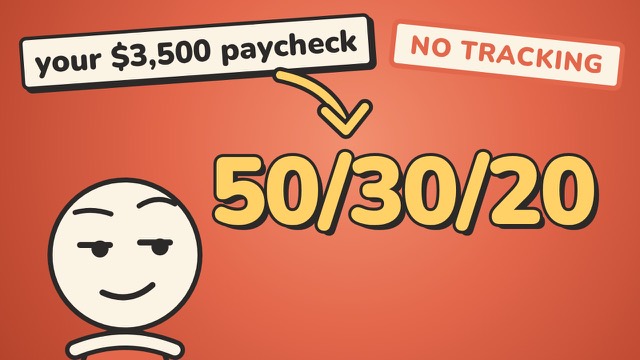
Sam takes home $3,500 and it's gone in two weeks. Here's a budget that takes about 20 minutes to set up, runs almost by itself and never asks you to write down a single coffee.
Lesson 12 · Big Money Decisions
Renting vs Buying a Home: Who Actually Wins? The Honest Math
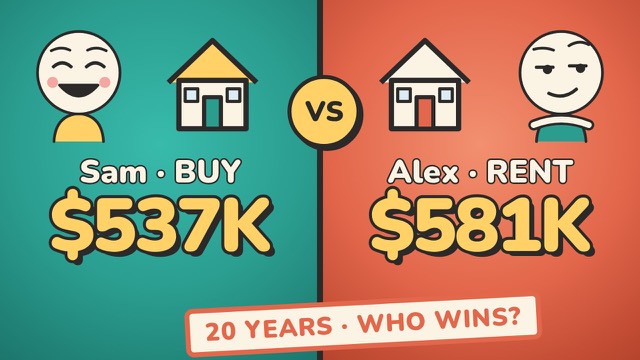
"Renting is throwing money away." Is it? We follow a buyer and a renter with the same income and savings for 30 years, using today's rates and every real cost, and show the three conditions that actually decide the winner.
Lesson 4 · Credit & Debt
Your Credit Score, Explained: How It Works and How to Build One From Zero
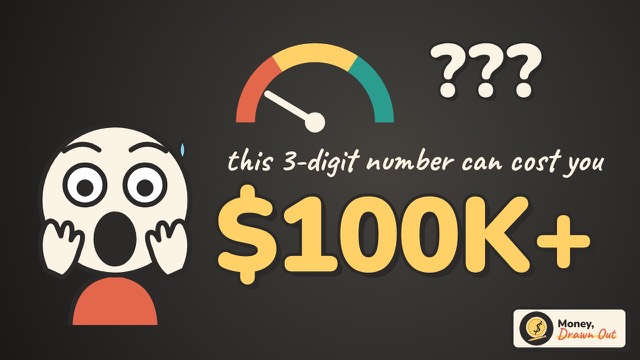
A three-digit number helps decide your apartment, your car loan and your mortgage rate. Here's what goes into it, what drags it down, and how to build good credit from zero.
Lesson 5 · Saving & Banking
The Emergency Fund, Explained: How Much You Need and Where to Keep It
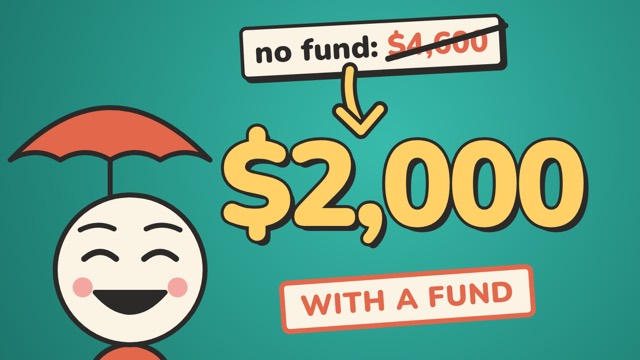
The same $2,000 car repair costs about $4,600 on a credit card and exactly $2,000 with an emergency fund. Here's how much you need, where to keep it and how to start when money is tight.